Hair transplant clinic marketing: where patients actually come from
In hair restoration, advertising is the patient acquisition. Channel choice, measuring patients rather than forms, and how an international patient actually decides.
Hair restoration marketing differs from most sectors in one respect: advertising here is not a brand awareness exercise. The advertising is the patient acquisition. A visitor arrives from a search result or an ad, sends photographs, gets connected to a consultant, and weeks later boards a plane.
Which is why the most common mistake in this sector is not in channel choice. It is in measurement.
Change what you measure first
Ad platforms work to deliver the event you report to them as cheaply as possible. If the event you report is “form submitted”, the algorithm gets very good at finding people who submit forms and never travel.
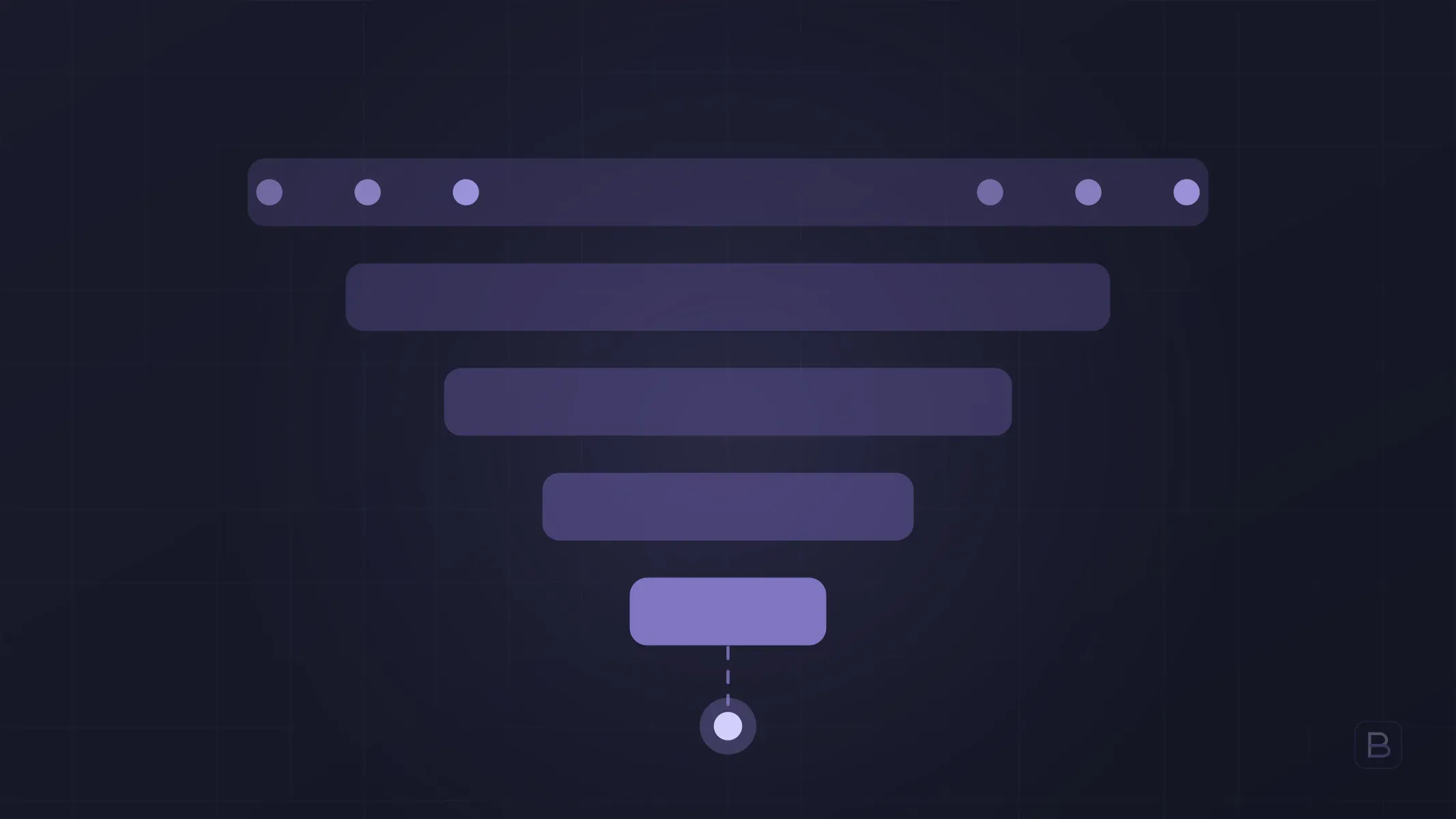
In hair restoration this distortion costs more than in other sectors, because the distance between form and surgery is long: form → WhatsApp conversation → photo assessment → quote → date → flight. Every step in that chain filters heavily.
The chain you need:
- Capture
utm_*andgclidon the landing page. - Write those fields into the CRM record on submission.
- Fire an event when a consultant marks the patient as arrived.
- Write that back to the ad platform as an offline conversion.
Skip step four and the panel keeps bringing you the cheapest form. We covered the technical side of this chain in our GA4 measurement guide.
The channels, and what each actually does
Search
The only channel where the patient already knows they have a need. Queries like “hair transplant turkey cost” carry high intent, and cost per click reflects it.
What matters here is keeping language and country in separate campaigns. A patient from Germany has a different cost per click, search volume and conversion rate than one from the UK. Pooled into one campaign, budget drifts toward whatever is cheapest — usually the market that converts least.
Click-to-WhatsApp ads
The format that works best in health tourism. Instead of filling in a form, the user lands straight in a chat; the friction disappears.
These ads carry a referral payload with the first message — which ad, which campaign. If you do not write that payload to the contact record the moment the conversation opens, the source of every WhatsApp patient is lost. It is the single most common measurement gap we see in this sector.
Social
Low intent, high volume. It works in hair restoration because the decision is emotional and before/after imagery performs.
But measured alone it misleads: social is usually the first touch, while the conversion arrives weeks later through search. Judge it on last-click and you will switch social off, then wonder why search volume fell.
Organic search
The slowest and most durable channel. Because cost per click is high in health tourism, organic traffic becomes the only sustainable channel over time.
While deciding, patients search for “technique”, “recovery timeline”, “how many grafts”. Content answering those questions does not get clicked as an ad — it gets read. And someone who has read it arrives better prepared.
How an international patient decides
This journey is structurally different from a local patient’s, and the marketing has to match it.
| Stage | The patient’s question | What helps |
|---|---|---|
| Awareness | “Do people go to Türkiye for this?” | Social, content |
| Evaluation | “Which clinic, which doctor?” | Before/after, reviews, doctor pages |
| Decision | “What does it cost, how many days?” | Price transparency, package contents |
| Trust | “What if something goes wrong?” | Guarantee, contact, aftercare |
Most clinics spend the entire budget on the decision stage and leave trust empty. Yet for someone travelling from abroad, the biggest obstacle is not price — it is uncertainty about the risk.
Response time is a marketing metric
In health tourism a patient messages three or four clinics at once. Who replies first is often more decisive than price.
What to measure is not the average but the long tail: how long does it take to answer 90% of messages? Does a message arriving at night wait until morning? With international patients, time zones make this worse.
When clinics start measuring it, the picture is usually the same: an average of twelve minutes, but a fifth of messages waiting over six hours. The lost patients are in that fifth.
Five common mistakes
1 · Pooling all languages into one campaign. Budget drifts to the cheapest click, which is usually the market that converts least.
2 · Making medical promises in ad copy. It breaks platform policy and carries regulatory risk. Describe process transparency instead of promising outcomes.
3 · Not recording WhatsApp conversations. If the whole sale happens there and nothing is logged, you cannot know which ad produced a patient.
4 · Using before/after images in only one place. They are the strongest persuasion asset in this sector and belong on the landing page, in social ads and in WhatsApp replies alike.
5 · Ignoring seasonality. Demand moves noticeably in summer and after new year. A flat budget misses the peak and wastes money in the trough.
Where to start
Before raising budget, build these three:
- Define a qualified enquiry — not a form, but an enquiry the consultant considers worth working.
- Carry the source into the CRM, WhatsApp arrivals included.
- Write the arrived patient back to the ad platform, so the algorithm optimises patients rather than forms.
Raising budget before those three exist is like speeding up a vehicle whose direction you cannot read.