What is a landing page, and how do you build one
A landing page takes a visitor arriving from an ad or email towards a single action. How it differs from a home page, the seven sections it needs, and the mistakes that push up cost per enquiry.
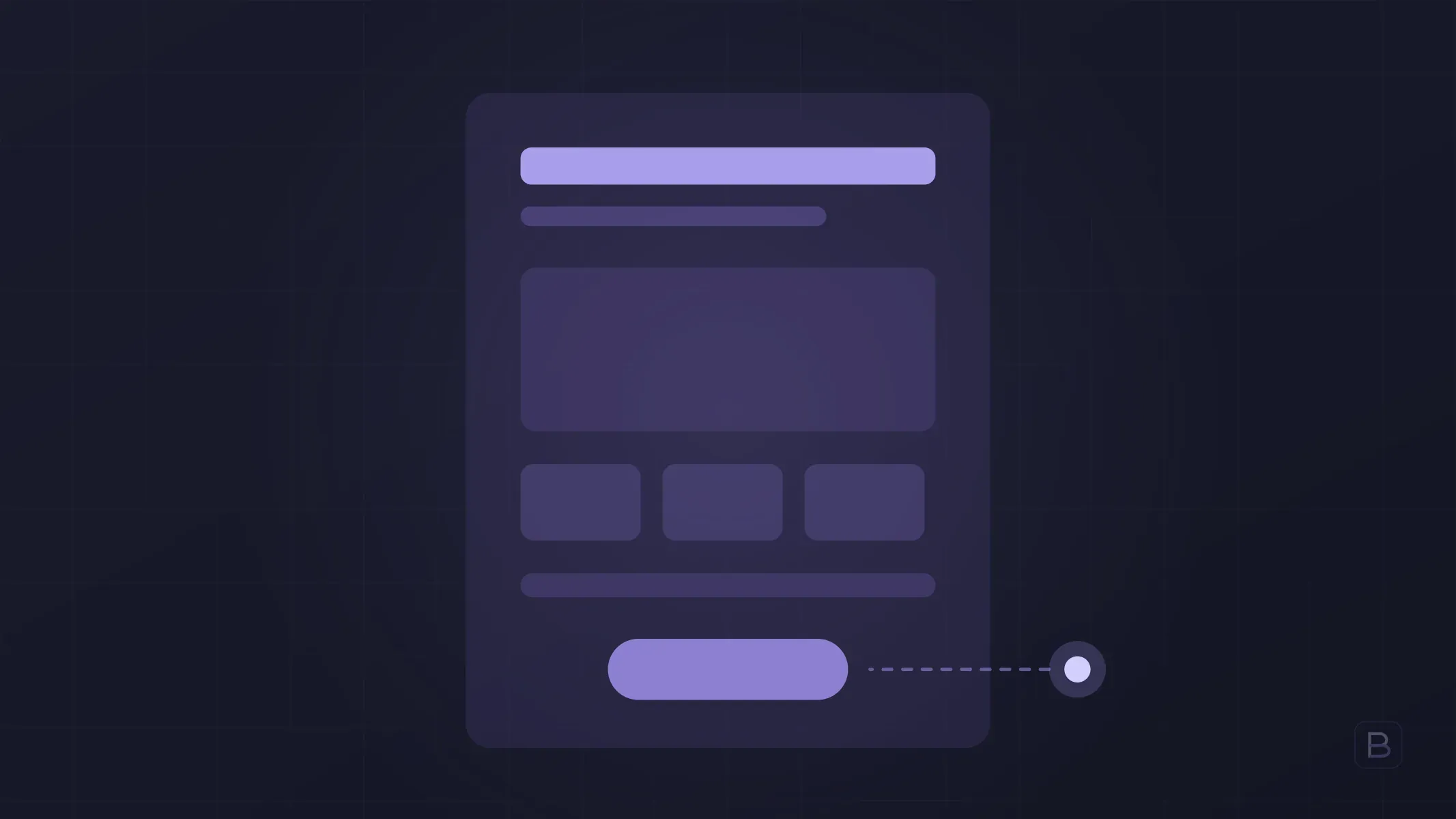
A landing page is a page built to take a visitor arriving from an ad, an email or a post towards a single action: filling in a form, calling, messaging on WhatsApp or buying. A home page answers “who are we”; a landing page delivers on the promise of the ad the visitor clicked.
A large share of ad budget is lost not in the ad but on the page the ad leads to. In the same campaign, changing the page can move cost per enquiry more than any work on bids and targeting.
How is a landing page different from a home page?
| Home page | Landing page | |
|---|---|---|
| Audience | Everyone | The person who clicked a specific ad |
| Goal | Point the way | One action |
| Menus and links | Many | Few or none |
| Measured by | Overall traffic | Conversion rate, cost per enquiry |
Sending someone who clicked a “dental implants” ad to the home page leaves them to find their own way through every service the clinic offers. Most do not; they go back.
Which sections does a good landing page have?
- A headline that speaks the ad’s language. If the ad says “Corporate website in 3–5 weeks”, the page headline should say the same. Visitors should know within two seconds that they are in the right place.
- Who it is for and what for. In a sentence or two: which problem you solve, and for whom.
- A call to action on the first screen. Visible without scrolling, repeated at the end of the page.
- Proof. Work done, numbers, certifications, reviews. Verifiable information, not general praise.
- The process. What happens after the form? Who calls, and when? Uncertainty makes people abandon forms.
- Answers to objections. Common questions about price, timing, warranty and location.
- A short form. Only the fields that are genuinely needed at that stage.
Mistakes that push up cost per enquiry
- A slow page. On mobile, a page that opens late loses the visitor before it loads, and the click is still paid for. Priorities are in the site speed piece.
- A long form. Every extra field loses some of the people filling it in. Budget and company size are often better asked in the first call.
- Several offers on one page. Presenting three services on one page forces the visitor to choose. A separate page per main offer works better.
- Unmeasured actions. If phone and WhatsApp clicks are not tracked, the page that brings the most enquiries can look like the worst one. What to measure is in the GA4 guide.
- No thank-you page. A separate thank-you page after the form makes measurement easier and tells the visitor what happens next.
Should a landing page be built in a tool or on your site?
Both work, with different trade-offs:
- Landing page tools are quick to set up, and marketing can change them without a developer. On the other hand they live on a separate domain, split the measurement setup and carry a monthly fee.
- Pages built inside your site sit on the same domain, benefit from the site’s speed and measurement setup, and can contribute to SEO. Changes need access to the development team.
If you run many short-lived campaigns, a tool can make sense. For your always-on main offers, a page on your site usually performs better.
How do you test a landing page?
Change one thing at a time: the headline, the form length or the button text. Send enough traffic to each version and judge by enquiries, and where possible by enquiries that became sales, not by clicks. On low-traffic campaigns, measuring the effect of small changes takes weeks; there, testing big differences (another offer, another page structure) is more efficient.
Frequently asked questions
Does every ad need its own landing page? Not every ad; every main offer and audience. People searching for the same service in different words can land on the same page.
Do landing pages hurt SEO? No. A well-built landing page inside your site can also rank in organic search. Only short-lived campaign pages may be worth keeping out of search engines.
Should a landing page have a menu? Simplifying the menu for ad traffic usually lifts conversion. Rather than removing it entirely, keeping the logo and contact details builds trust.
How long should a landing page be? As long as it takes to answer the visitor’s questions. Simple, low-cost offers need short pages; high-consideration services need more proof and more answers.
At Boygantech the team running the ads and the team coding the page build landing pages together; page speed and measurement are part of the same job. To look at your campaign together, get in touch via our digital marketing agency page.