Meta ads management: where the Instagram and Facebook budget goes
In Instagram and Facebook ad management, creative and measurement decide the outcome — not targeting. How Meta differs structurally from Google Ads, and the common mistakes.
Running Meta ads the way you run Google Ads is the fastest way to lose money on the channel. The two platforms have similar dashboards but do fundamentally different jobs.
On Google the user types a need and you capture that intent. That is demand capture. On Instagram or Facebook nobody is looking for your ad — you appear mid-scroll. That is demand creation.
That single difference determines everything else about the channel.
On Meta the lever is creative, not targeting
The habit inherited from years of practice is to spend most of the effort on targeting settings: age, interests, behaviours, detailed segments. That approach no longer works — partly because privacy changes weakened interest data, and partly because Meta’s algorithm is now better at finding people inside a broad audience than a human is at defining one.
The setup that performs today usually looks like this: keep the audience broad and let the creative do the separating.
Because what increasingly determines who sees your ad on Meta is the ad itself. The algorithm observes who watches a video through and finds more people like them. The creative does the targeting, not you.
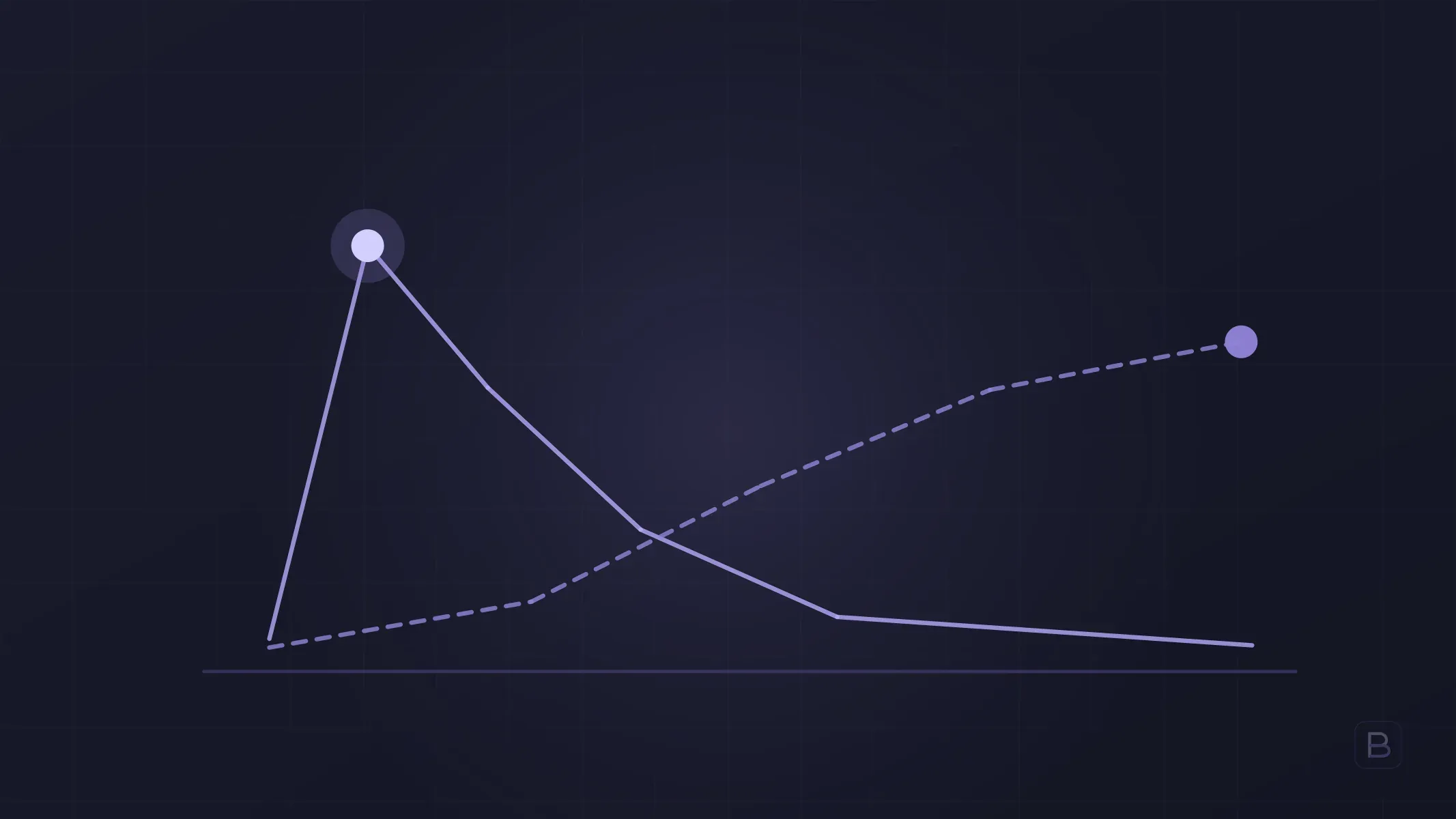
In practice this means: if you can’t produce several new ad variants a month, you can’t scale on Meta. Creative fatigue — the same ad’s performance decaying over time — is a real, measurable event here. On Google Ads a piece of copy can run for months; on Meta the same asset tires within three to six weeks.
Measurement: what you’re actually seeing post-iOS
The gap between the conversions Meta reports and the money in your bank is the most argued-about topic on this channel. The cause is technical:
When a user declines tracking, Meta cannot observe the conversion directly and models it — estimates it statistically. Part of the number in the dashboard is not measurement, it is inference.
So a serious Meta setup needs three things:
- Server-side event delivery (Conversions API). The browser pixel alone sends incomplete data; server-sent events close the gap.
- Domain verification and event prioritisation, configured in Business Manager and missing from most accounts.
- A verification source outside the dashboard — GA4 or the CRM. When two sources disagree, decide in advance which one you act on.
The healthiest method is to stop treating Meta’s number as absolute truth and compare against total revenue instead: when you switch Meta off, does total revenue fall? That crude measure is more honest than the dashboard figure. The technical side of the chain is in the GA4 measurement guide.
Attribution: last-click punishes Meta unfairly
A common sequence: Meta ads appear not to convert, they get switched off, and then brand searches on Google and direct traffic fall too.
The reason is that Meta is often the first touch. Someone sees the brand on Instagram, doesn’t click or buy then, and two weeks later types the company name into Google. Under last-click, that sale is booked to Google.
The practical way to manage this is to treat Meta not as a direct sales channel but as a demand feeder, and to judge on blended cost of acquisition: total marketing spend over total new customers, rather than channel-by-channel profitability.
Five mistakes we see repeatedly
- Choosing the wrong objective. A campaign built on “engagement” finds people who engage and don’t buy. If you want sales, the objective is conversions — not traffic, not engagement.
- Too many ad sets. Splitting budget across ten sets means none of them exits the learning phase. Meta’s learning phase wants roughly 50 conversions per set per week. Fewer sets on a single budget works better.
- Constant interference. Changing budgets and bids daily resets learning continuously. Leave three to four days between changes.
- Judging remarketing on its own. Ads shown to previous site visitors always look like they convert well — that audience was going to convert anyway. Remarketing is necessary, but it cannot be the success metric.
- No creative pipeline. If you cannot produce four to eight new variants a month, raising the budget will not change the result.
Google or Meta
The right answer is usually both, for different jobs:
- Google Ads — an audience aware of its need and searching. High intent, high cost per click, fast results.
- Meta — an audience whose need hasn’t formed yet. Low intent, low cost, delayed results.
If budget is tight, starting with Google is usually correct: the demand already exists there and you simply capture it. Meta comes in when you want to grow the demand itself. We set out the full division of labour, SEO included, in SEO vs Google Ads.
The service that covers organic posting and message handling alongside ads is described in what does a social media agency do.
If you’d like to review your Meta account’s measurement setup and creative cycle together, our ad management practice starts there.