Web design agency or software agency: which is right for your site
A web design agency builds the look on top of a ready-made platform; a software agency develops the system behind the site. Five questions that show which one your site needs.
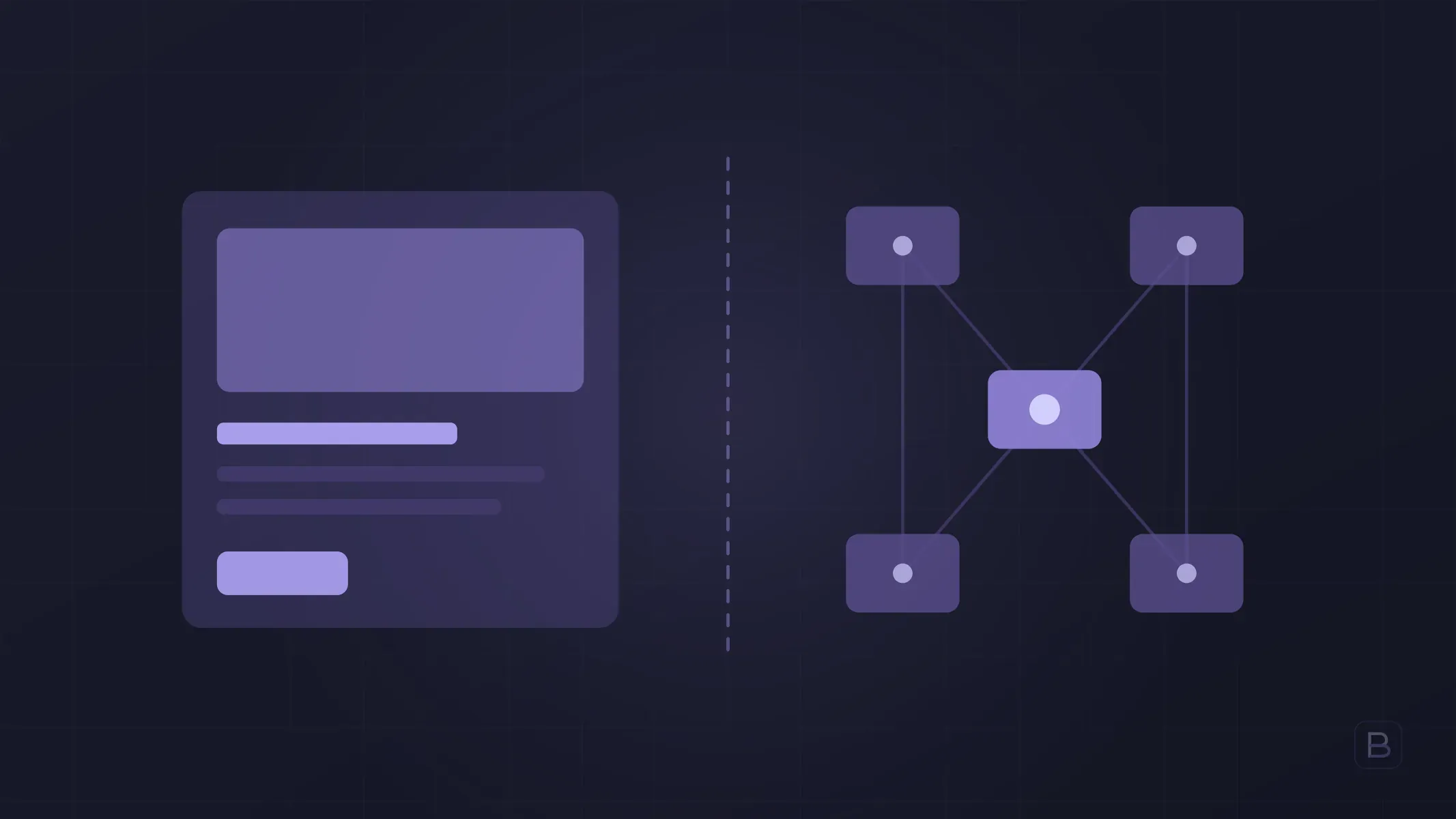
Short answer: if your site will only inform and collect enquiries, a web design agency is enough; if it will connect to other systems, handle transactions, or if speed and search visibility directly affect your revenue, you need a software agency. The two do not do the same job at different prices; they do different jobs.
Anyone collecting quotes for “a website” usually hears figures that differ by a factor of ten or more. Most of that gap comes from some quotes pricing a design job and others pricing a software job.
What does a web design agency do?
A web design agency builds the site’s look and content. It usually places a theme on a ready-made platform such as WordPress, Wix, Webflow or Shopify, adapts it to your brand and enters the pages and copy.
Its strengths: visual identity, page layout, fast delivery and a low starting cost. Its limit is the platform’s limit. When something is wanted that the theme and plugins do not allow, it either cannot be done or gets done by stacking plugin on plugin.
What does a software agency do?
A software agency develops the system behind the site: database, business rules, integrations, performance and security. Design is part of the work, but what is delivered is not a theme; it is code that belongs to you.
Its strengths: ERP, CRM, payment and e-invoicing connections; multilingual and multi-market structures; speed targets; custom flows such as accounts and dashboards. The price is a longer timeline and a higher starting cost. The full scope is covered in what a software agency is.
The differences between the two
- What is delivered: A configured theme from a design agency; source code you own from a software agency.
- Platform: A ready-made platform with a design agency; an architecture chosen for the need with a software agency.
- Integration: As far as the plugin allows with a design agency; as far as the need requires with a software agency.
- Speed and technical SEO: As far as the theme and plugins permit with a design agency; a target that can be written into the contract with a software agency.
- Timeline: Days or a few weeks with a design agency; weeks or months with a software agency.
- Maintenance: Platform and plugin updates with a design agency; code, servers and backups with a software agency.
Five questions that show which one you need
1. Will the site connect to another system? If data moves to or from stock, accounting, a CRM or a booking system, it is a software job.
2. Will transactions happen on the site? Accounts, orders, payments, quote calculators or a customer portal take it beyond design.
3. How many languages and markets? Ready-made platforms carry up to two languages comfortably. Five languages with country-specific content and pricing need an architecture decision.
4. How much of your revenue comes from search and ads? If you pay for traffic, page speed is a direct cost. A slow, plugin-heavy site makes every click more expensive; the order of priorities is in improving website speed.
5. What will the site be doing in three years? If a simple site is enough today but the roadmap includes a dashboard, dealer login or online sales, choosing the right foundation now is cheaper than rewriting later.
If the answer to all five is no, a good web design agency is the right and economical choice for you. We have no hesitation in saying so: not every site needs custom software.
Why are the prices so different?
A design agency mostly prices by page count and design effort. A software agency prices by rules, integrations and testing effort. The work behind two sites that look the same can differ tenfold.
So before comparing quotes, ask both firms for the same thing: what is included and what is not, in writing. The line items are covered in website cost.
How do you test a firm that says “web design and software”?
Most firms say they do both. Four questions show which one it really is:
- Whose name is the repository opened in? If no repository is mentioned, the job is a theme setup.
- Is a speed target written into the quote? “It will be fast” is not a target; a measurable threshold is.
- Have you built this integration before? Ask for a concrete example.
- Can the site be handed to another team in a year? The answer should include documentation and an access list.
Frequently asked questions
Is a WordPress site a bad site? No. It is a reasonable choice for content-heavy and simple sites. The problem is not WordPress but trying to solve needs beyond it with plugins.
Can I start with a design agency and move to a software agency later? You can, but the site is usually rebuilt. If the domain and content are yours, the move is smooth.
Which one for an e-commerce site? For a standard shop, a ready-made platform and an agency that sets it up is enough. With custom pricing, a dealer structure or an ERP connection you need a software agency; the comparison is in building an e-commerce site.
Does a software agency do design too? Yes, interface design is part of the work. A full brand identity project, however, is a separate specialism.
If you are not sure which side your site falls on, describe your need in a few sentences; you can book a call from our software agency page. If a design agency alone will do, we will tell you that too.